
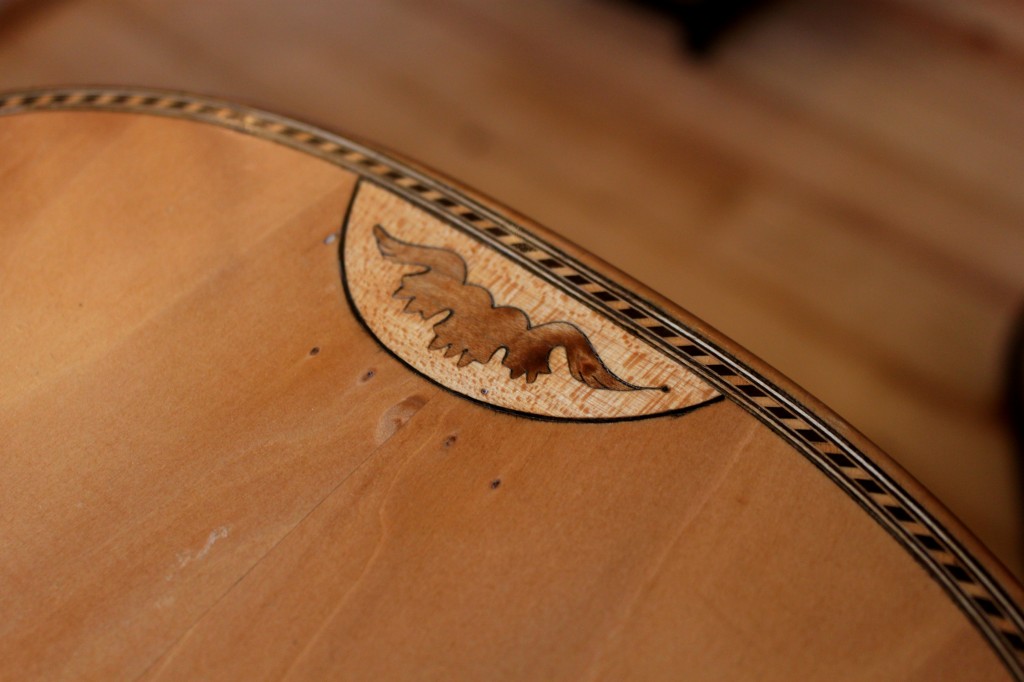
Another Portuguese regional guitar, from the central coast in particular. Having been practically extinct, it is fortunately being played again. Students used it in the last quarter of the 19th century for serenades and songs, before the Portuguese guitar took its place.
It has an oval soundhole and 5 courses arranged in an unusual way: the first 3 are double and the other 2 are triple. Its best-known tuning matches the first 5 strings of the classical guitar, which makes it an instrument with a very particular sound that is intuitive to play.
The most common build configurations are:
| Top | Basswood, Spruce |
| Back and sides | Walnut |
| Neck | Mahogany |
| Fingerboard | Panga Panga, Rosewood, Ebony |
| Tuning mechanism | Machine heads |
Every instrument is set up in our workshop for its player. Get in touch or visit us at Rua de Santana, 37, Porto.